

You see a gaming phone with a built-in fan, shoulder triggers, and 165Hz screen—and wonder: is it just a gimmick for gamers, or a capable daily driver? Most gaming devices prioritize performance over practicality, but this model claims to balance both. Below is a no-nonsense breakdown of its gaming-focused features, real-world gameplay performance, and whether it works for work, calls, and errands beyond the game.
Starting with design and build: It features a 6.8-inch screen with aggressive gaming aesthetics—angular edges, a matte plastic back (grip-friendly for long sessions), and a prominent camera bump. Weight hits 230g, thickness 8.9mm—heavier than standard flagships (200-210g) but balanced for two-handed gaming. The standout: programmable touch shoulder triggers (0.15mm response time) integrated into the frame, flush when not in use to avoid pocket snags. The USB-C port supports 10Gbps data transfer, and there’s a 3.5mm headphone jack (rare in modern phones) for low-latency gaming audio. Build quality feels durable, though the plastic back scratches easier than glass, and the active cooling fan’s vent collects dust over time.
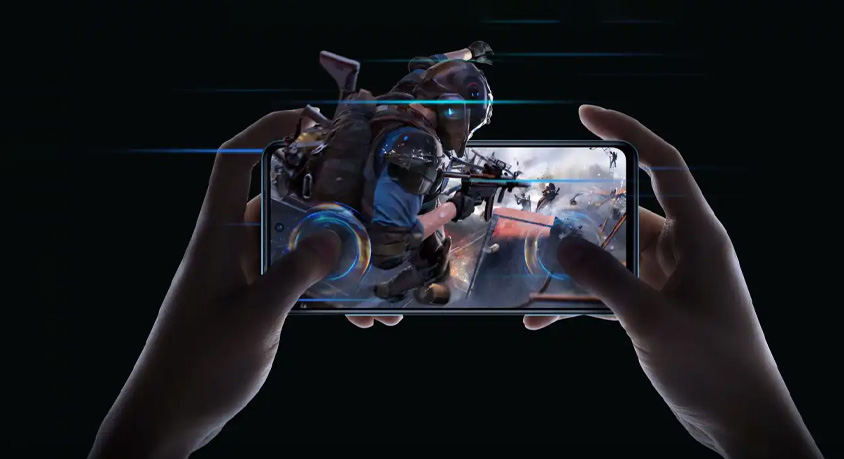
Performance is its core strength, powered by a top-tier flagship processor and 12GB/16GB RAM. The unique active cooling system—combining a rotating fan (5000rpm) and vapor chamber (10,000mm² cooling area)—keeps temperatures in check. Playing Genshin Impact at maximum settings (60fps) for 90 minutes, the phone stays at 39-42℃ (vs. 45-48℃ for non-gaming flagships) with zero throttling. COD Mobile benefits from the 165Hz AMOLED screen (360Hz touch sampling rate) and shoulder triggers: the triggers act as virtual L1/R1 buttons, enabling quick aim and fire without finger contortions. A competitive gamer reports 15% faster reaction times vs. a standard phone, with no input lag. For daily use, this performance translates to smooth app launches (0.3-0.5 seconds), multitasking (10+ apps open), and even light video editing—no overkill, just consistent speed.
The 165Hz screen (2712x1220 resolution, 2100 nits peak brightness) excels beyond gaming. It’s adaptive, switching to 60Hz for social media to save battery, and ramps up to 165Hz for gaming/streaming. Colors are vibrant (100% DCI-P3 coverage), and the high brightness makes it visible in direct sunlight—great for outdoor gaming or commuting. A casual user watching TikTok notices smoother scrolling, while a content creator appreciates sharp video playback. The only downside: the high refresh rate drains battery faster than 120Hz screens, though the adaptive feature mitigates this.
Battery and charging solve gaming’s biggest pain points: a 5500mAh battery lasts 6-7 hours of continuous gaming (Genshin at max settings) or 10-12 hours of daily use (calls, social media, occasional gaming). The 120W wired fast charging tops it from 0-100% in 25 minutes—critical for gamers who burn through battery mid-session. A student can charge from 20% to full during a 30-minute lunch break, while a commuter gets 50% charge in 12 minutes. Unlike many phones, the charger is included, and there’s support for 45W fast wireless charging (a rare bonus for gaming devices).
Gaming-focused tradeoffs matter for daily use. The camera system is functional but unremarkable: a 50MP main sensor takes decent daylight photos, but low-light shots are grainy, and the 8MP ultra-wide lacks detail. It’s fine for social media snaps but not for photography enthusiasts. The phone’s weight and bulk make one-handed use awkward—commuters carrying it in jeans pockets will notice the heft. The cooling fan is silent during light use but kicks in with a faint whir under load, which some users find distracting. Additionally, the gaming-optimized software includes useful features (performance profiles, trigger customization) but has minor bloatware (game launchers, trial apps) that’s easy to uninstall.
Target audiences are clear: this phone is ideal for hardcore gamers, competitive mobile players, and students who game heavily and need a reliable daily driver. It’s also great for anyone who values raw performance and fast charging over camera perfection or slim design. It’s not for users prioritizing portability (go for a slim flagship), photography (choose a camera-focused model), or quiet operation (the fan’s whir may annoy sensitive users).
Real-world scenarios highlight its versatility: a competitive COD player uses the shoulder triggers to climb leaderboards, then switches to work mode for video calls and spreadsheets—no lag, no overheating. A student plays during breaks, charges quickly between classes, and uses the large screen for note-taking. Conversely, a frequent traveler finds it too bulky for a small bag, while a food blogger skips it for a phone with better low-light photography.
To wrap up, this gaming phone isn’t just a one-trick pony—it’s a powerful, versatile device that crushes gaming and holds its own as a daily driver. The active cooling, high-refresh screen, and shoulder triggers deliver tangible gaming benefits, while the large battery and fast charging solve practical needs. The tradeoffs (weight, camera, fan noise) are acceptable for its target audience, and the performance justifies the compromise. If you’re a gamer who wants a phone that works as hard for work/errands as it does for play, this is the smart choice. If you rarely game or value slimness/photography, stick to a standard flagship—this one’s built for those who live to play.
Disclaimer: Mention of any brand or trademark is for identification purposes only and does not indicate any partnership or endorsement.
